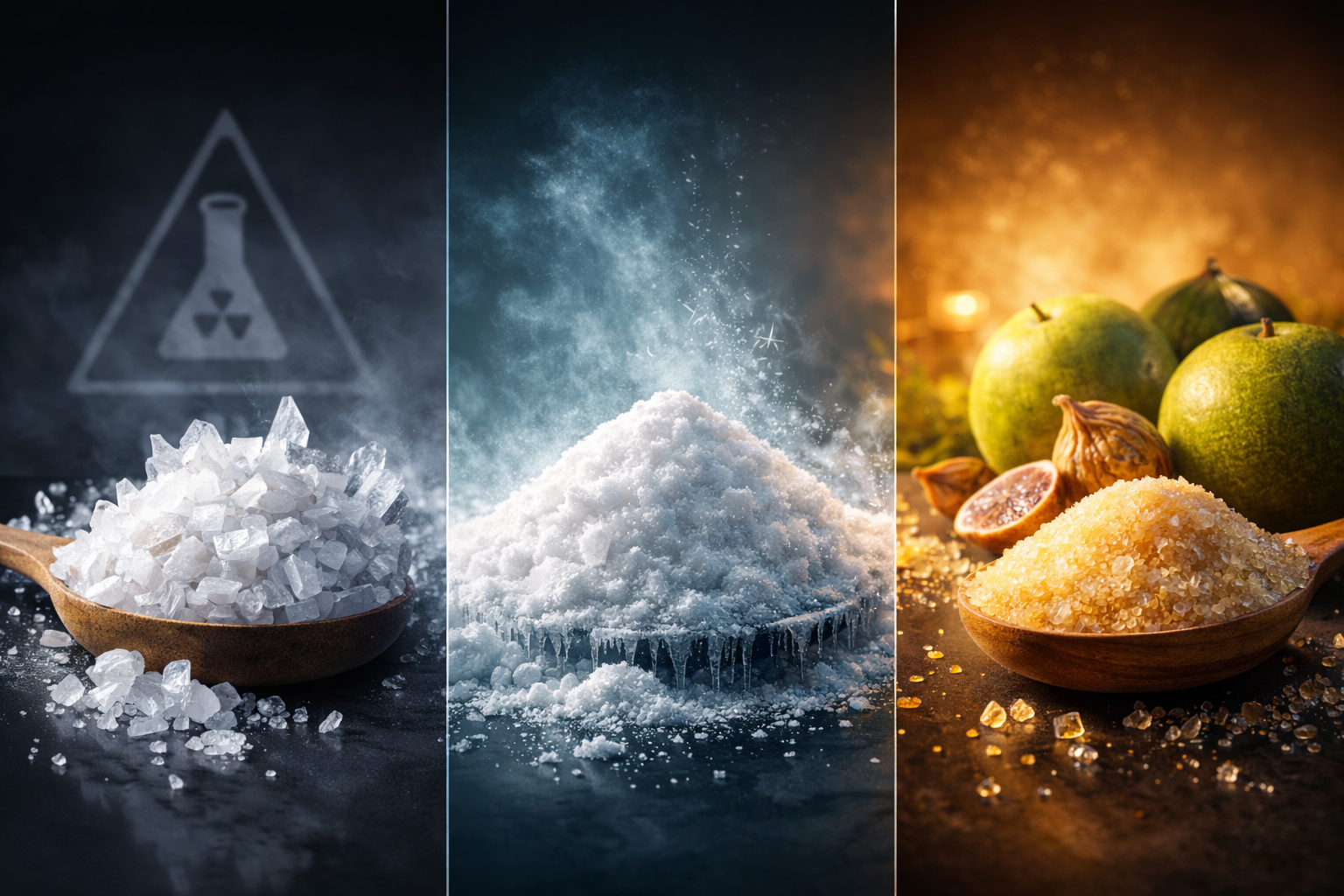
Walking down the sweetener aisle can feel like a chemistry exam. Xylitol? Erythritol? Allulose? Today, we strip away the marketing fluff and look at the pure science to find the safest, tastiest option for your health.
The "Cheat Sheet" Comparison
| Feature | Regular Sugar (Sucrose) | Erythritol | Xylitol | Allulose (Pure Monk) |
|---|---|---|---|---|
| Calories (per g) | 4.0 | 0.2 | 2.4 | 0.4 |
| Glycemic Index (GI) | 65 (High) | 1 | 7-13 | 0 |
| Aftertaste | None | Strong "Cooling" Effect | Minty/Cooling | None (Sugar-like) |
| Gut Side Effects | Inflammatory | Bloating (in high doses) | High (Gas/Diarrhea) | Minimal |
| Pet Safety | Safe | Safe | Toxic to Dogs | Safe |
1. Xylitol: The "Minty" Trap
Xylitol is a sugar alcohol found in birch trees. While it fights cavities, it has two major downsides:
- Digestive Distress: It ferments in the gut, often causing gas and diarrhea if you eat more than a small amount.
- Highly Toxic to Dogs: Even a small piece of Xylitol gum can be fatal to dogs. At Pure Monk, we strictly exclude Xylitol for pet safety.
2. Erythritol: The "Cooling" Effect
Erythritol has been the keto king for years because it doesn't spike blood sugar. However, it doesn't taste quite right. It creates a bizarre "cooling sensation" in your mouth (like mint, but without the flavor). Furthermore, recent studies (2023) have raised questions about Erythritol and heart health markers.
3. Allulose + Monk Fruit: The Holy Grail
This is why we created Sway. We combine Monk Fruit (for sweetness intensity) with Allulose (a rare sugar found in figs and raisins).
Allulose is chemically almost identical to fructose, but your body cannot metabolize it. It passes through you without impacting insulin.
The Verdict?
If you want a sweetener that bakes, browns, and tastes exactly like sugar without the chemical aftertaste or gut issues, Monk Fruit + Allulose is the scientifically superior choice.
Try Sway Today