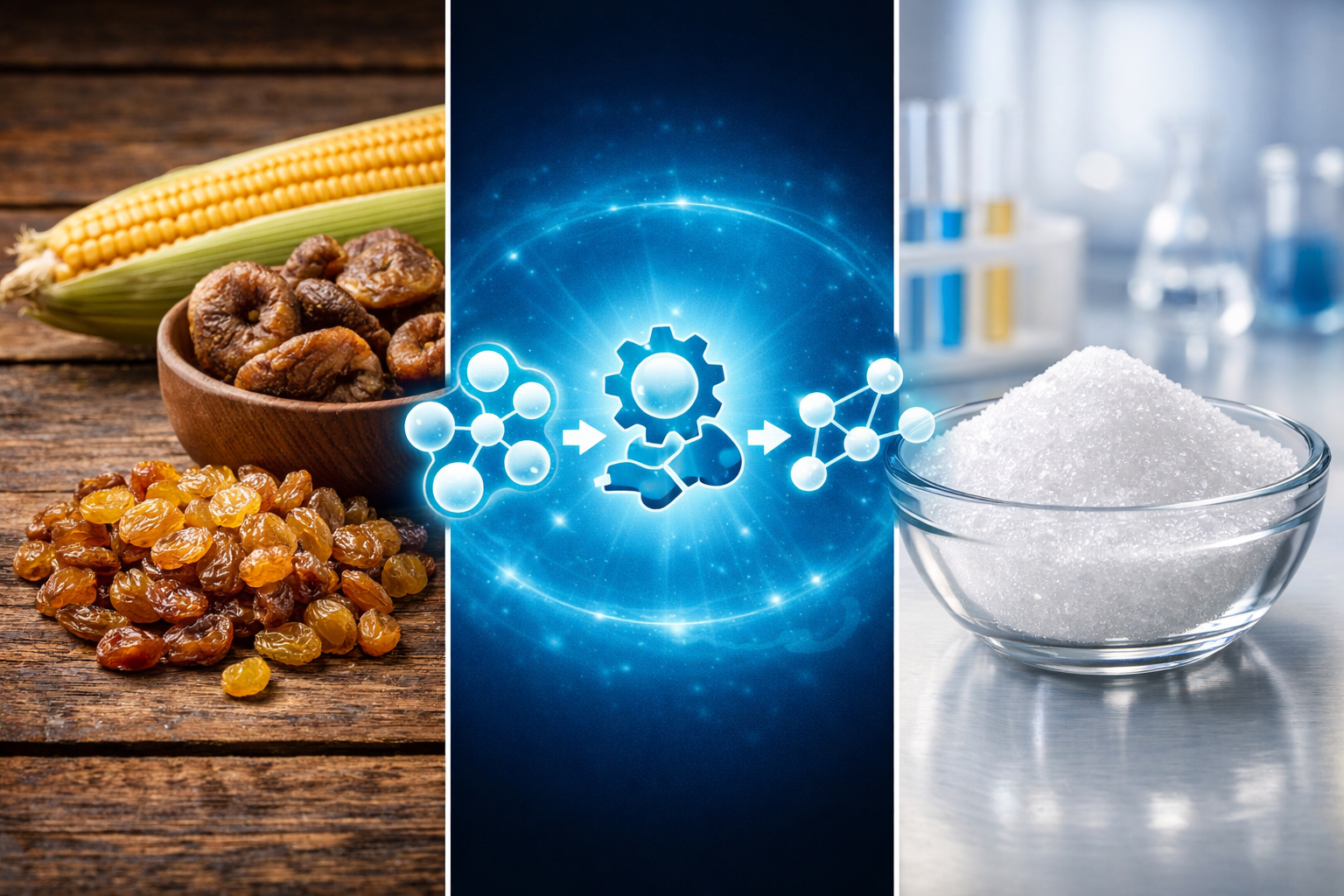
You’ve likely heard of Stevia or Monk Fruit, but there is a new superstar in the world of healthy sweeteners: Allulose. It tastes exactly like sugar, browns like sugar, but has almost zero calories. But where does it come from? Is it natural? Let’s dive into the science.
1. What is Allulose? (The "Rare Sugar")
Allulose is classified as a "Rare Sugar" (monosaccharide) because it is found in nature in very small quantities. Unlike artificial sweeteners created in a lab, Allulose exists naturally in foods you probably already eat.
It is recognized by major health bodies, including the FDA, which classifies it as Generally Recognized As Safe (GRAS) and allows it to be excluded from "Total" and "Added" sugar counts on nutrition labels due to its unique metabolic properties. Source: FDA Guidance on Allulose
Today we know it exists naturally in:
- Figs
- Raisins
- Jackfruit
- Maple Syrup
2. The Ingredients: How Do We Make It?
Since extracting Allulose directly from figs is incredibly expensive (you’d need thousands of figs for a single bag!), we use a natural Enzymatic Process to create it on a larger scale, similar to the fermentation process used to make yogurt or cheese.
The Raw Material
The process usually starts with readily available plant-based starches, such as Non-GMO Corn. These starches are broken down into Fructose (a simple sugar found in most fruits).
3. The 4-Step Process
How do we turn a calorie-heavy fruit sugar into a calorie-free rare sugar? It’s all about molecular structure.
Step 1: Extraction
We extract natural starch from the plant source (like corn or wheat) and break it down into simple Fructose.
Step 2: Enzymatic Conversion
This is the magic step. We add natural enzymes (proteins) that rearrange the atomic structure of the fructose molecule, converting it into D-Allulose.
Step 3: Filtering
The mixture is filtered to remove the enzymes and any remaining fructose, leaving behind pure liquid Allulose.
Step 4: Crystallization
The liquid is dried into fine white crystals that look, taste, and bake exactly like table sugar.
4. Why Use Allulose? (The Benefits)
Why do we blend Allulose with Monk Fruit in Pure Monk Sway? Because they are the perfect team.
Allulose is not metabolized by the body like regular sugar. It passes through your system without significantly raising blood sugar or insulin levels, making it safe for Diabetics and Keto dieters.
Source: NIH Study on Allulose & Postprandial GlucoseReady to taste the future of sugar?
Experience the perfect blend of Monk Fruit and Allulose in Pure Monk Sway.
Get Sway Now